
お灸のよさをもっと伝えたい!日本鍼灸、もうひとつの柱 (日本語は英語の後に)
What comes to mind when you hear the word “moxibustion”?
For many people, it’s those round adhesive patches — like the well-known Sennenkyū brand — which are commonly used in Japan and found in many Japanese acupuncture clinics. Or perhaps the image of a smoldering moxa stick being slowly waved over the skin, a technique commonly seen in Chinese acupuncture practice.
“Doesn’t that burn?” “Sounds a little scary, honestly.” Those reactions are completely understandable. In Japan, there’s even an old expression — okyu wo sueru (お灸を据える) — which means to give someone a stern reprimand. Moxa as punishment. That’s how deeply it’s woven into the culture.
Which is exactly what we want to talk about today: moxa has been part of Japanese life for a very long time. And there’s so much more to it than most people realize.
Moxibustion has a rich and layered history.
There are far more types of moxa than most people have ever seen — different shapes, different techniques, different purposes. And over centuries, Japanese practitioners did what Japan tends to do very well: they refined the art with exceptional precision and care.
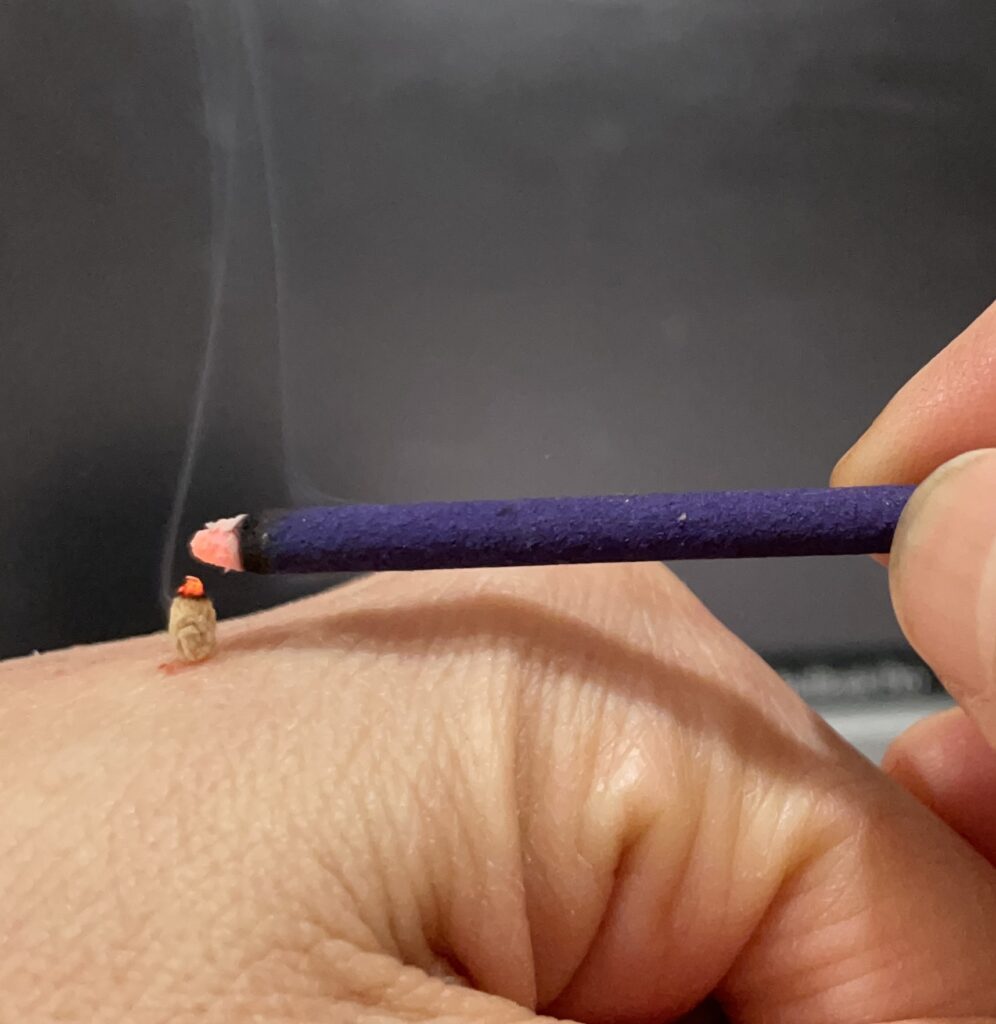
One of the clearest signs of that refinement is the quality of Japanese mogusa (艾) — the processed mugwort used in moxibustion. Japan may be the only place in the world with the artisanal expertise to produce mogusa of this purity. And it’s precisely this high-purity mogusa that makes possible the more delicate techniques in Japanese moxibustion — like forming tiny cones the size of a grain of rice, placing them directly on the skin, and delivering warmth with extraordinary precision.
Only three factories in all of Japan still produce mogusa at this level. Our teacher, Seino Sensei, visited one of them and wrote about it in depth. If you’re curious about moxa, it’s well worth a read. → [Link to Seino Sensei’s blog — coming soon]
Moxa doesn’t have to be hot.
This surprises a lot of people: in Japanese acupuncture, moxibustion is usually not intense or uncomfortable at all.
There are certainly contexts where stronger heat is appropriate. And historically, more intense moxa was the norm for certain conditions.
But —
Japanese practitioners came to understand, over time, that a gentler, softer flame could reach the body more deeply than a strong one. That a quiet warmth, rather than a sharp heat, could address a far wider range of conditions. This is one of the defining characteristics of Japanese moxibustion.
At JAM, moxa feels good. Most patients describe it as a gentle, spreading warmth — something the body welcomes rather than braces against.
Why we say “Acumoxa” — not just Acupuncture.
In Japan, the national licensing exams for acupuncture and moxibustion are completely separate. That’s not just an administrative detail. It reflects how seriously Japan has always regarded moxa as its own independent discipline — one that deserves its own mastery.
In Japanese acupuncture, needles and moxa belong together. One without the other isn’t the full picture. Outside Japan, the practice is widely known simply as “acupuncture” — but we think Acumoxa tells the truer story.
In North America, moxibustion can actually be practiced without a license. That fact alone tells you how much of its depth has yet to be understood here. At JAM, we have a big ambition: to bring this remarkable world of moxa to more people.
If you’re curious and want to learn more, we’d love to see you at our free community workshop, What is Japanese Acupuncture? We’ll talk moxa, needles, and everything in between — take your time, ask your questions.
And honestly? The best way to understand moxa is to feel it. Come in for a treatment. We’ll talk while your body finds its balance.
みなさんが知っている「お灸」とは、どんなものでしょう。
せんねん灸のようなシールタイプ。日本では一般的なものであり、日本の鍼灸院でもよく使われています。また、棒灸をゆっくりかざすあの光景。こちらは中国鍼灸ではよく使われる方法です。 お灸を「なんとなく熱そう」「ちょっと怖いかも」と感じる方も結構いらっしゃいますし、日本では昔から「お灸を据える」という言葉を、悪い事をした時の罰として使ってきたような背景もあります。
お灸って思った以上に、日本に昔から根付いていたんです。という話を今日は少しだけ。
お灸には、実は豊かな歴史がある。
お灸の種類は、実はとてもたくさんあります。形も、使い方も、目的もさまざま。そして日本人は長い時間をかけて、その技術をとことん磨いてきました。
その証のひとつが、日本の「艾(もぐさ)」の品質です。お灸に使う艾を、これほど高純度に仕上げる技術を持つのは、世界でも日本だけと言っていいでしょう。その高純度な艾を使うからこそ、米粒くらいの大きさに捻り、肌に直接置いて熱を送るという、繊細な技術を必要とする灸治療が可能になっています。 その艾を作れる工場は今、日本全国でわずか3軒しか残っていないといいます。私たちの師匠、清野先生がそのうちの一軒を見学され、詳しく記事にされていますので、お灸に興味がある方はぜひとも一読される事をお勧めします。→ [清野先生のブログ記事リンク・後日追加]
お灸は、熱くなくていい。
意外に思われるかもしれませんが、日本鍼灸のお灸は、熱くないことがほとんどです。 熱いお灸が良いとされてきた時代背景もあります。 熱いお灸が効果を表す症状の場合もあります。
でも、
強い刺激ではなく、やわらかく、やさしい火の方が、からだにとって深くはたらきかけることができる。日本の鍼灸師たちは、時代をかけてそのことを発見していきました。 これが日本のお灸の特徴です。
JAMでのお灸は、心地よいものです。むしろ、じんわりと温かくて気持ちいい、と感じていただけることの方が多いです。
「鍼灸」は、英語ではAcupunctureなんです。「Acumoxa(アキュモクサ)」と呼ぶ理由。
日本では、鍼師と灸師の国家試験は別々に存在します。これは単なる制度の話だけではなく、お灸がそれだけ独立した技術として、長く大切にされてきた証だと思っています。
日本鍼灸には、必ず鍼とお灸、両方必要です。鍼とお灸あってこそひとつの治療が完成する。 海外で鍼灸がAcupunctureと認識されていますが、この鍼とお灸が混在しているAcumoxa(アキュモクサ)という言葉の方が理にかなっていると思うのです。
ちなみに北米では、お灸はライセンスなしで行うことができます。それはお灸の奥深さが、まだ十分に伝わっていないからこそ、JAMでは、もっとこの素晴らしいお灸の世界を世に伝えていきたい、という大きな野望があります。
お灸、面白そう!もっと知りたい!という方がいらっしゃいましたら、ぜひ、私たちの開催する無料WS、What is Japanese Acupuncture? に足を運んでみてください。 お灸のこと、鍼のこと、じっくりお話しさせていただきます。
とはいえ、お灸のことを一番よく知る方法は、やはり体で感じること。ぜひ一度、治療においでください。からだを整えながら、一緒に話しましょう。